assessment
-
What does preschool assessment look like?
Yesterday I shared some thoughts on how to talk to families about assessment, but part of explaining assessment is talking about what it looks like in the preschool classroom, and that can be really difficult. It’s so hard because there isn’t a right or wrong way to do it. That’s the beauty of preschool assessment, it can’t always be scheduled – you certainly can’t sit down and say “I’m going to observe Kate’s positive social skills today” but that gives you freedom to make it work for you. You might collect work samples from your writing activity on Tuesday, jot down a couple of anecdotal notes on Wednesday, and take…
-
Explaining assessment to families
Assessment in preschool is definitely a thing – it’s a huge part of what early childhood educators do every day, but most casual observers would never know that. This is because it’s not obvious. As teachers it important to be able to explain this unique assessment process to parents and family members so that they have a clear understanding of how we know what skills and concepts their child has mastered. There are two things that make preschool assessments just a little different; First, preschool assessments should be formative assessments. This simply means that you are using the results of any assessment to plan further activities and learning experiences. These…
-
Google Drive Student Portfolios
I originally shared this post a couple of years ago, and it has been the most popular post that I’ve ever written. It was time to give it a face lift, so I’ve updated the photos, but all of the text is the same! I’ve always used three-ring binders to compile my students’ portfolios, but this year my classroom did not have the extra space to store all of them – 1 binder per student takes up a lot of precious space! I decided to do digital portfolios, and using Google drive to store them has been an absolute lifesaver. Having all of the portfolios on Google Drive meant that…
-
Collecting Assessment Evidence
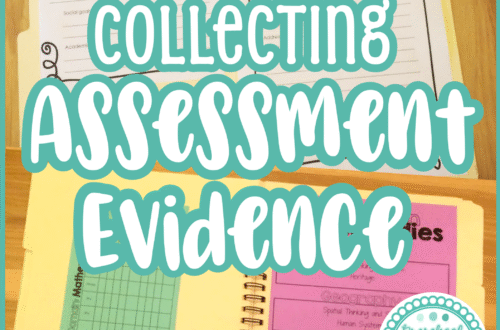
I’ve been doing a lot of work with assessments lately, and one of the most important aspects of assessment is collecting evidence to support any assessment scores and decisions. Personally, I think the most difficult thing about collecting all of this evidence if finding a way to organize it all and track what I’ve gathered and what I still need. To help myself keep all of that information organized, so I have it when I need it, I put together a evidence collection binder for each student. I bound 8 file folders – one for each domain that I collect evidence on, then I taped the bottom of each folder…
-
Friday Freebie: Evidence Checklist
Happy Friday! It’s that time of year when the weather is perfect and the last thing I want to do on the weekend is stay inside, so my goal is to be super productive today so that I can enjoy my weekend! Yesterday I shared some thoughts on informal assessment, and I mention using those observations as evidence for your formal assessments. Here is a freebie checklist to help you keep track of all of the evidence you need to collect – it’s pretty basic, but you can white out the fields if you want to personalize it to your own assessments. Download your copy here and enjoy your weekend…
-
Informal assessments: What do your students know?
Before you can start any kind of project or theme exploration it is important to know what your students already understand about that particular topic. You don’t want to teach them things they already know, but you do want to be able to build upon the current knowledge and understanding. So how do you find this information out? There are a number of strategies that you can use, and all are considered informal assessment. Ask them. This seems really simple, but, have you ever gone up to a preschooler and said “What do you know about the farm?” You probably get a blank stare, not because they don’t know anything,…
-
Making time for conscious observation during the day
Preschool teachers spend all day making observations. We do it so regularly that we might not even realize that we’re taking all of those mental notes. We’ve trained our selves to recognize fine motor milestones, social emotional experiences, and scientific inquiry throughout the day, but do you ever take the time to just sit and watch your students as they play? I mean, without considering assessments and portfolios, just to watch the children as they play? There are so many things that you can observe when you remove yourself from their conversations and interactions. Taking time to sit by yourself and just observe is incredibly valuable. It can give you…
-
Start your portfolios now!
It’s not conference time yet, but it will be soon enough. Start putting together your student portfolios now, if you do it little by little you won’t have nearly as much prepping to do when it is time for conferences. Here are some of my previous posts on putting together student portfolios; Preparing for Preschool Conferences What’s in my Student Portfolios Space Saving Portfolios Check these out as you start compiling your student portfolios!
-
Systems for tracking anecdotal notes
Anecdotal notes are incredibly helpful, they provide evidence that shows which skills children have mastered, and which skills need additional practice. They also give teachers the opportunity to write down direct quotes from children, which can be insightful, hilarious, and adorable. Being able to access all of this information when it comes times for conferences is invaluable, and parents love to hear what their children have been up to. The main issues with anecdotal notes are; storing and organizing all of those random little notes remembering to write them in the first place When it comes to remembering to write them down, I’ve found that it works best if you…
-
What’s in my student portfolios
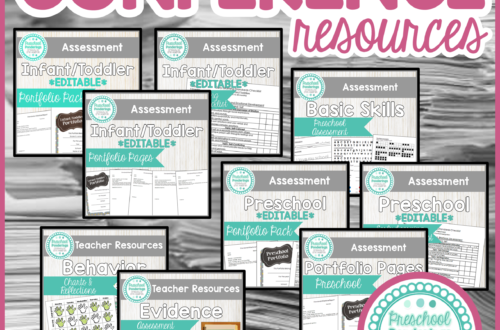
Yesterday I shared a tutorial for setting up digital student portfolios using Google Drive. Today I want to show you what I put in my student portfolios. I include all of these documents, regardless of the age of the student (I have used them with infants, toddlers, and preschoolers). In Ohio we use ODE’s Early Learning Development Standards, so that is what my portfolios are based on. You can explore the standards here. All of these portfolio pages are available in my TPT store, and they are editable, so you can download and get started immediately. Check out my assessments here. Each portfolio starts with a cover page to document…