-
Currently!
It’s September, and I for one and happy about that. August is always a crazy month, and this year was no exception, so welcome September, it’s time to slow down! Listening: General Hospital is the soap opera I’ve watched since I was in high school, I’ve missed a lot here and there, but now I can stream it on my iPad whenever I want so I catch up in the evenings or on the weekends. Loving: I am so ready for this weekend. I am looking forward to some time to relax and finish some projects that I didn’t manage to get done over the summer. I don’t have much…
-
Taking photos to use in portfolios
A great preschool portfolio includes tons of evidence of growth and development. Some of this evidence should be work samples and artwork, but evidence can also be photos of children participating in learning experiences, interacting with each other, and exploring their environment. Capturing these moments with your camera can take some practice, but once you get the hang of it, it will be like second nature (and the children will eventually forget that you’re taking their picture and stop making those cheesy faces). Here are some tips for taking great portfolio photos; try to get multiple different views of the same thing – close ups and wide shots can both…
-
Systems for tracking anecdotal notes
Anecdotal notes are incredibly helpful, they provide evidence that shows which skills children have mastered, and which skills need additional practice. They also give teachers the opportunity to write down direct quotes from children, which can be insightful, hilarious, and adorable. Being able to access all of this information when it comes times for conferences is invaluable, and parents love to hear what their children have been up to. The main issues with anecdotal notes are; storing and organizing all of those random little notes remembering to write them in the first place When it comes to remembering to write them down, I’ve found that it works best if you…
-
When Educators believe in each other
Have you seen the TED talk by the amazing Ms. Rita Pierson. It is powerful. She puts into words every single reason that most of us became teachers in the first place. This quote from her talk hits me to the core every single time that I read it; I fully believe that every child needs a person in their corner. A person who tells them they’re worth it, they can be great, and do amazing things. A self-fulfilling prophecy can be a powerful thing, when you tell someone that they are incredible enough times, they start to believe you. I will give that to any child in a heartbeat.…
-
Ideas for classroom centers
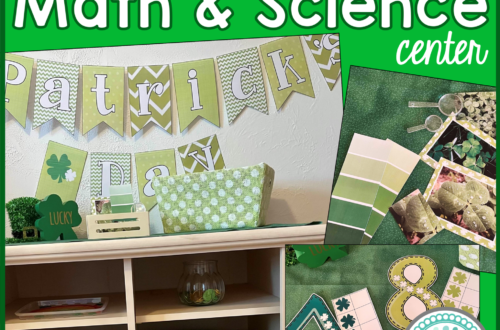
Are you setting up your activity centers and interest areas for a new group of kiddos? Here are some great ideas from previous posts; Reggio Inspired Dramatic Play Centers Reggio Inspired Science Centers Reggio Inspired Writing Centers Reggio Inspired Math Centers For more great ideas, check out my Preschool Pin Boards!
-
Planning the Classroom Environment
There are some many things to consider when you think about setting up a preschool classroom. It can be very overwhelming! I’ve found that it helps to break that job into a number of small(ish) tasks. 1. Think about your activity centers. Some centers need specific furniture – a writing center has to be near a table, and a classroom library needs a place to store books. Other centers work best in specific areas of the classroom – you might want to keep your art center near the tile floor. 2. Arrange the furniture. This is my favorite part, I can look at a piece of furniture and know exactly…
-
Friday Freebie – Calendar Practice
I’ve shared my love for traceable calendars before, so I feel like ABC Helping Hands made this freebie for me! Go download their free year’s worth of traceable calendars and follow the link above to see how I use these in my classroom.
-
Developmentally appropriate ways to teach time
Teaching time is complicated and confusing – how can a number mean one thing when a long hand is on it, but something entirely different when a short hand is pointing to it? It just doesn’t make sense, especially not to preschoolers who don’t really understand symbolic thinking. That doesn’t mean that you can’t use the clock in your classroom. I am always an advocate for exposing children to concepts so that they feel comfortable with them when it comes time to learn more. Here are some developmentally appropriate ways to use the clock in your preschool classroom; Arrange your daily schedule as if it were on a clock –…
-
Discussing Routines with Preschoolers
Every year my back to school activities include experiences that are designed to help my kiddos get used to our daily routine. One of the activities that I do with them s to discuss routines, and help them put this idea into perspective by considering the routines that they follow at home. I give them each the opportunity to tell me what they do when they wake up in the morning – the kinds of things they have to do to get ready for school. This takes some prompting at first, but after they get going they have pretty good memories, and it’s fun to see what their priorities are…
-
Using a picture schedule
A picture schedule is a great way to help all of your students anticipate what is coming next, which makes transitions from activity to activity a lot easier. I created a set of schedule cards that include pictures. These cards are designed for the preschool classroom, but they also include common activities for elementary school classrooms, so they are great for inclusion classrooms and students who need a little extra support when it comes to the daily schedule. My favorite thing about this set is that it also includes smaller schedule cards that you can put on a ring for students to carry with them. They can match the pictures…